16.2.11

Design Profile: Tim Brown

tim brown ideo

Tim Brown is CEO and President of IDEO. He also has an informative blog called Design Thinking and is trying to start a design revolution of the same name.

"Design thinking can be described as a discipline that uses the designer’s sensibility and methods to match people’s needs with what is technologically feasible and what a viable business strategy can convert into customer value and market opportunity." -Tim Brown

To learn more immediately, you can watch his TED video, read a paper he wrote for Harvard Business Review, or buy his book.

I am not sure how we can use these ideas in Free Time yet, but I am certainly keeping them in mind.
-amber

15.2.11

video for all


As video becomes more accessible, I think even small designers will start using it in their marketing strategies. This AREAWARE video is ADORABLE!

11.2.11

architecture + products + interaction + behavior

Apartamento__Todays_Home_11 
Being an architecture historian/project architect/product designer, it only makes sense that I am really interested in the seamless integration of space, product, behavior, and interface right?

Well thankfully after sending out cover letters explaining why  I am uniquely qualified to contribute to innovative user experience design strategies, there is a conversation in the current issue of Apartamento chaired by Jonathan Olivares that strengthens by position.
In it "Benjamin Pardo, Director of Design at Knoll, Mark Wasiuta, architect and theorist teaching at Columbia University’s Graduate School of Architecture, Planning and Preservation, and Masamichi Udagawa, partner of the industrial, interface and interaction design firm Antenna met at Benjamin’s New York City apartment to discuss the effect of new technologies and products on our homes."
Read the full conversation here .

apartamento_06_21

20.8.10

found


in the closet at work.

7.8.10

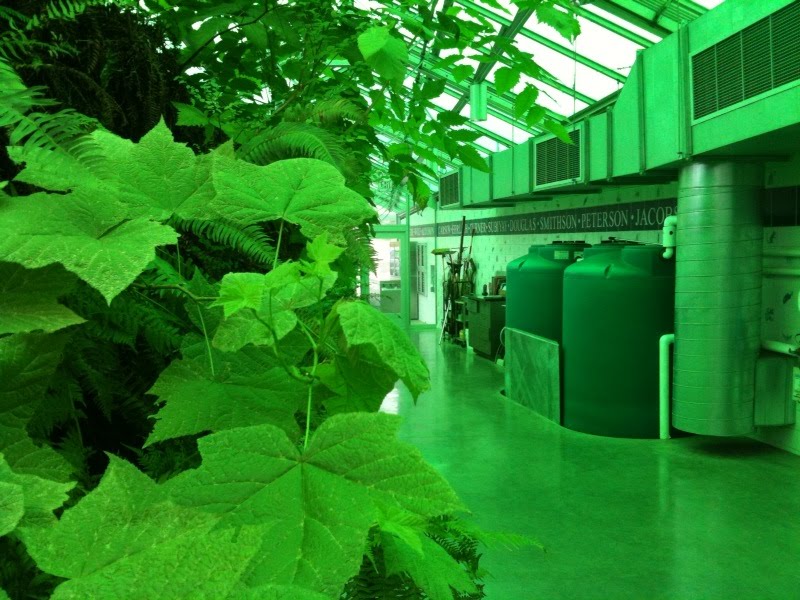
ANOTHER DAY AT THE VIVARIUM

This is what I try to tell the visitors that come in on my volunteer days (Friday mornings if you want to visit), but mostly they want to see the slugs.

DION: In some ways, this project is an abomination. We’re taking a tree that is an ecosystem—a dead tree, but a living system—and we are re-contextualizing it and taking it to another site. We’re putting it in a sort of Sleeping Beauty coffin, a greenhouse we’re building around it. And we’re pumping it up with a life support system—an incredibly complex system of air, humidity, water, and soil enhancement—to keep it going. All those things are substituting what nature does—emphasizing how, once that’s gone, it’s incredibly difficult, expensive, and technological to approximate that system—to take this tree and to build the next generation of forests on it. So this piece is in some way perverse. It shows that, despite all of our technology and money, when we destroy a natural system it’s virtually impossible to get it back. In a sense we’re building a failure.